

Coordinate Measuring Machines (CMMs) come in various sizes and types. The machines can be distinguished on various factors such as physical structure and axes of the machines, probing systems incorporated and type of control they have. Various provisions and accessories can make these machines more versatile.
In this article we will have a look at the various types of these machines. In the mean time you can learn more about their principles and operation in our Comprehensive Guide to Coordinate Measuring Machines (CMMs) →
Physical Structure and Axes Systems
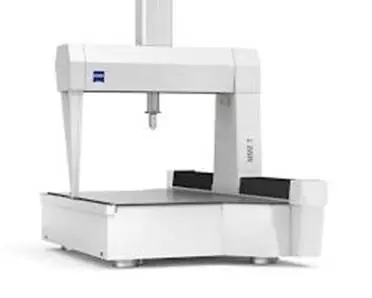
Bridge Type
The configuration of these machines is bridge type, a beam is supported by two vertical columns that can move in X, Y, and Z directions. The Z column is supported by a counterbalance to make the movement smooth and accurate. These CMMs are the most common type of machines being used in the market. There bed sizes can vary from 500×500 to more than 2000×3000. Used for the inspection of small to medium sized parts that need high precision; machining parts; laboratory/metrology room inspections.
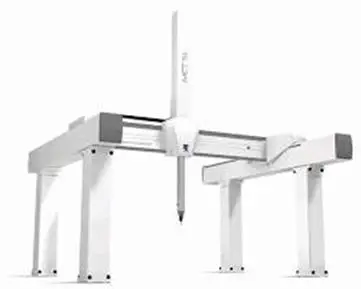
Gantry Type
These are like the bridge type configurations, however, these are used for larger volumes of inspection and for bigger parts. Instead of a beam structure overhead, these machines utilize a gantry (rail type) supported by two vertical columns usually mounted on floors. These are used for Large/heavy components; aerospace frames; large automotive bodies; ship parts. These are very expensive machines.
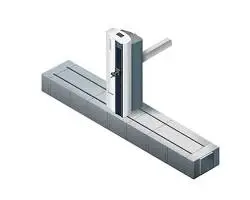
Cantilever Type
These machines have probe mounted only on one side (side of base), rather than along beam. They allow more access from three sides. It is used for comparatively simpler parts. These are less rigid than gantry type CMMs.
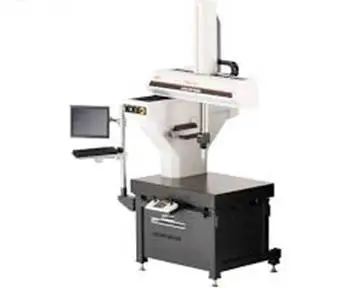
Horizontal Arm CMM
There is a vertical column on the machine, and a horizontal arm is attached with the probing system. These CMMs are usually used for the inspections of sheet metal parts in automotive sector where access from the top is difficult. They have lower accuracy then bridge or horizontal type machines.
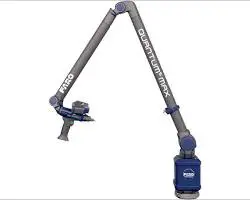
Portable Arm-Style Articulated CMM
These are also known and PCMMs. Recently, they are becoming more popular alternate to the fixed type CMMs as they can move around anywhere. There working envelopes are also large going up to 4000 mm. However, the accuracy of these machines is less way less than fixed type CMMs. Their articulated style allows them to be used in precision assembly and alignment tasks as well.
Optical / Non-Contact CMMs
These are optical CMMs with non-contact sensors like camera, laser lights, distance meters, videoscopes etc. These sensors can also be purchased in addition to the conventional probing systems. These are suitable for soft materials, freeform surfaces where touching the part might be damaging. These are fast but the accuracy is low as compared to other sensors.
Custom Designed / Hybrid Specialized CMMs
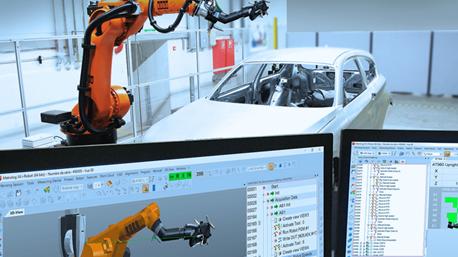
There are many applications in specialized industries for specific measurements. The custom built CMMs can allow for integration with robotic arms on production and assembly lines, where they can measure seamlessly. They have extremely high build costs and complexities, but they are robust to the specific task and very high accuracies.
Probing Technology
The method of sensing the surface determines several CMM types, including contact and non-contact systems.
Contact Probing Systems
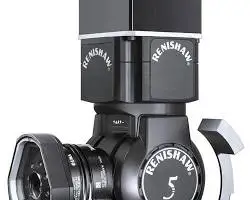
The CMMs with contact probes have a touch and trigger probe, that senses when in it contacts the workpiece. The most popular touch and trigger probing system is the TP20 probe from Renishaw. In the past, probing systems were manufactured only by Renishaw and it was the industry leader. However, lately the CMM manufacturers have developed their own probing systems. These probing systems have single and multiple styli for taking measurements.
Non-Contact Probing Systems
The non-contact probing systems consists of optical sensors. One of the noncontact probes are OTP6M probe. It allows for noncontact measurements. It is used where parts are sensitive to touch like extra polished mirrors and alignment sensors on navigation units.
Continuous Probing Systems
The continuous probing systems can scan (open and closed loop) profiles and contours whose inspection through conventional means is a very difficult task. SP600 and SP25 both from Renishaw are popular choices in these types of probing systems. They provide highly reliable results for profile inspections.
